
AI training
Training that leaves the capability
inside your organisation
PNF Consulting delivers AI transformation projects as well as training. Improvements raised during a course are carried forward as AX tasks, through to the point where the people who attended build them.
Embedding AI capability
For training to become organisational capability
The goal of AI training is not attendance but execution capability that stays with the organisation. Even after a successful workshop, without someone to carry the result forward and without internal standards, the capability stops at the individual and working practice stays the same.
What sets it apart
PNF training differentiators
Practising on your own materials and finishing with a deliverable are baseline requirements for any corporate course. Four things sit on top of that so the result becomes organisational capability.
01 Improvements carried into tasks
Training providers step away once the course ends, leaving no one to act on what was raised. PNF turns those improvements into AX tasks and carries them through to the point where the attendees build them.
02 Goals set by tier
If leadership never selects a task, the results of staff training stall at approval. We set different target outcomes for executives, all staff, role specialists and AX champions so the tiers interlock.
03 Honest scope of what works
A tool demonstration does not tell you how far it goes with your own work. We set out which tasks can be automated today and which still need human judgement.
04 An internal AI usage policy
Without a policy, staff cannot decide what company material may be entered, and use stops. Each course closes with a draft internal AI usage policy as a deliverable.
PNF Consulting applies AI to its own administrative and research work first. What we teach comes from using it ourselves.
Programme tiers
Different targets by
seniority and role
Four tiers have distinct target outcomes, arranged so decisions at the upper tier and execution at the lower tier interlock. Role exercises are held for manufacturing settings.
Key people in each department design and build the tools that take over their own work. They are also the people who do the building in an AX Coach-Build engagement.
Output · working prototype, pilot planExercises follow manufacturing roles in quality, production, maintenance and purchasing — defect reports, output collation, fault histories, quotation comparisons and similar daily work.
Output · role-specific AI assistant, improvement proposalEveryone, including shop-floor staff, takes one of their own tasks from start to finish. The starting point assumes no IT background.
Output · role prompt cards, internal AI usage policyThis covers the criteria for decisions rather than the technology. We separate what the company should pursue first from what should wait.
Output · candidate AX tasks, guiding principlesFormats range from a short executive briefing to intensive courses and a multi-month roll-out programme, arranged around your headcount and schedule. A detailed curriculum follows a preliminary interview and is provided as a proposal.
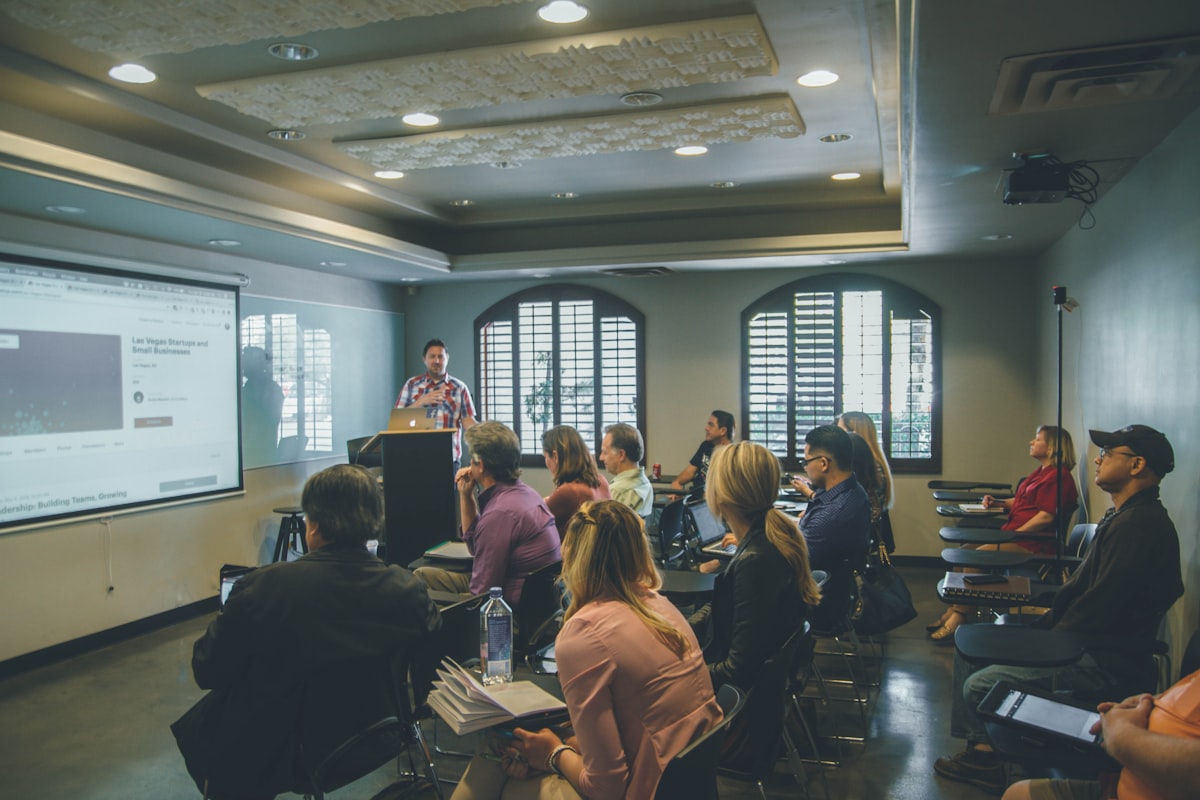
How a course runs
Course procedure
1. Preliminary interview — organisation, main workflows, systems in use, security policy and which AI tools are available.
2. Material preparation — real work material is de-identified and rebuilt into role-specific exercises.
3. Hands-on delivery — explanation is kept short so participants spend the time doing the work, with the instructor circulating.
4. Sharing results — completed work is presented, and what is ready to use is separated from what needs more work.
5. Task hand-off — the improvement ideas raised are written up as candidate AX tasks, and can lead into a pilot build.
Track record
Selected training delivered
- Manufacturing — practical AI training for SME manufacturers
- Public training institutions — practical generative AI use for Human Resources Development Service of Korea K-Move participants
- Executive briefing — leadership session on applying AI
- Corporate practice courses — administrative workflow automation, data analysis and reporting automation
We will propose a curriculum
around your people and schedule
Tell us the headcount, roles, schedule and which work weighs most heavily, and we will propose a tailored curriculum and quotation.